
Limits of the manufacturing technology
What small waves or seams mean - and what they don't.
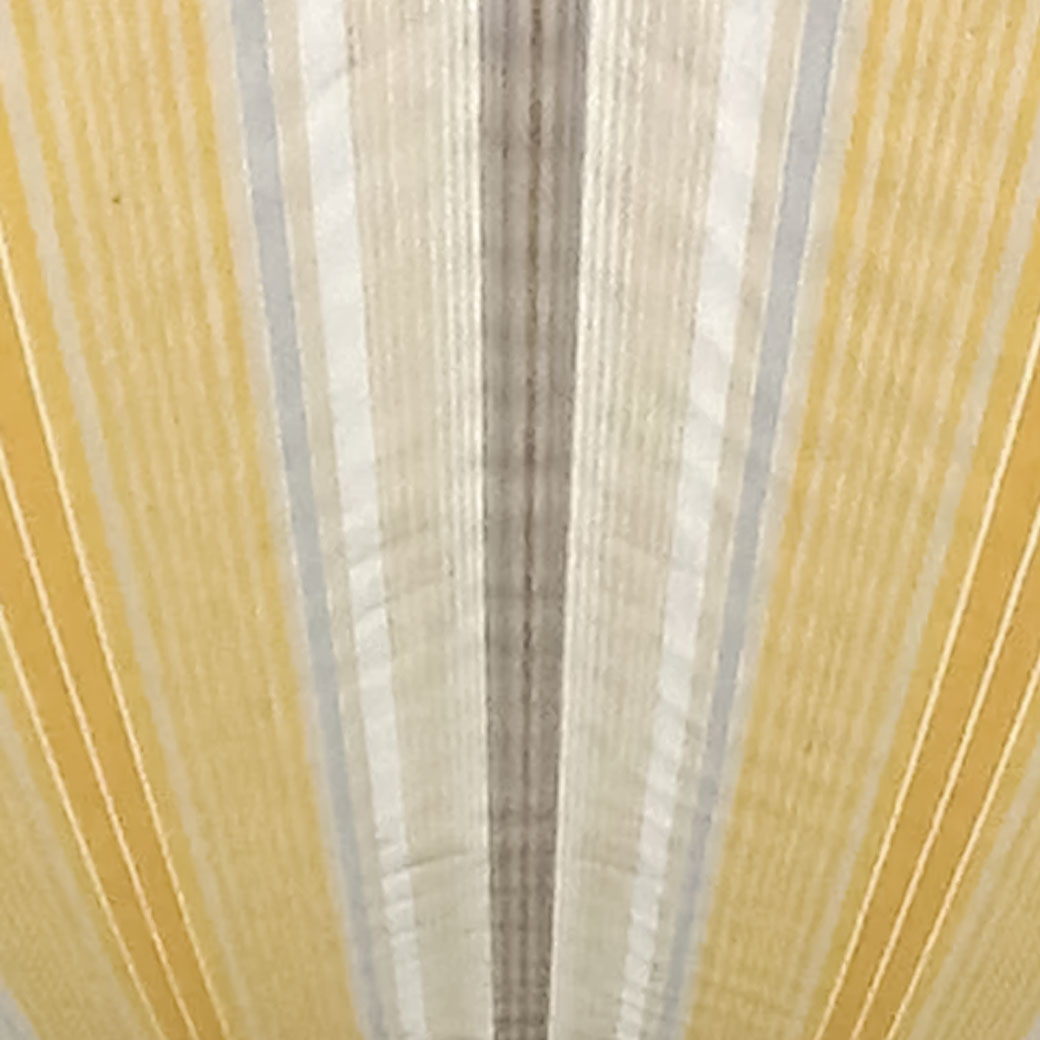
Awning fabrics are high-performance fabrics that can withstand sun, wind and weather and remain beautiful for many years.
Because they are permanently stretched, rolled up and moved, they show small signs of this wear and tear over time - completely naturally and without affecting their protective effect or service life.
Each fabric is a piece of craftsmanship, made to last outdoors.
Material with character
Creases and folds
Fine creases can occur during cutting and winding. They are particularly visible against the light when light colours are used. These creases have no effect on the function or durability, they are a normal side effect of the material.
Creases
Wrap pleats
Seam pleats
Waviness in the seam area
Awning fabrics consist of several panels that are carefully sewn together. When rolled up, the top layer of fabric covers a slightly longer distance than the bottom layer, which can cause a slight ripple to form along the seams.
This is technically unavoidable and has no effect on the tension or service life of the fabric.
Honeycomb formation
Awning fabrics are sewn in the outward direction so that the tensile stress acts on the warp threads, which are woven more tightly than the weft threads.
Depending on the weather conditions and fabric size, this creates a honeycomb effect. In unfavourable light or wet conditions - especially if the fabric has been run in wet - this effect is more pronounced.
The inclination of the fabric should be at least 14° so that rainwater can run off easily. This also prevents the formation of water pockets or dirt streaks.
The honeycomb formation can extend to the centre of the fabric, but has no influence on the quality, function or service life of the fabric.
Visible fabric edges with blended yarns
The modern blended yarns in our collections create lively colour effects with light and dark threads.
This creates subtle colour nuances at the interfaces between the yarns. This is not a fault, but unavoidable with blended yarns, but only becomes apparent on closer inspection.
For permanently beautiful OUTDOOR WORLDS
Your awning fabric will remain attractive for the longest time if it is retracted and protected in rain and strong winds.
If it does get wet, it will dry best if you extend it again soon.
This keeps the material supple, the colours vibrant - and your DRAUSSENWELT a place to feel good for many years to come.
Further information is available in the brochure "Guidelines for the assessment of ready-made awning fabrics" from the Industrieverband Technische Textilien-Rollladen-Sonnenschutz e.V., Fliethstraße 67, D-41061 Mönchengladbach, Germany
Downloads
